
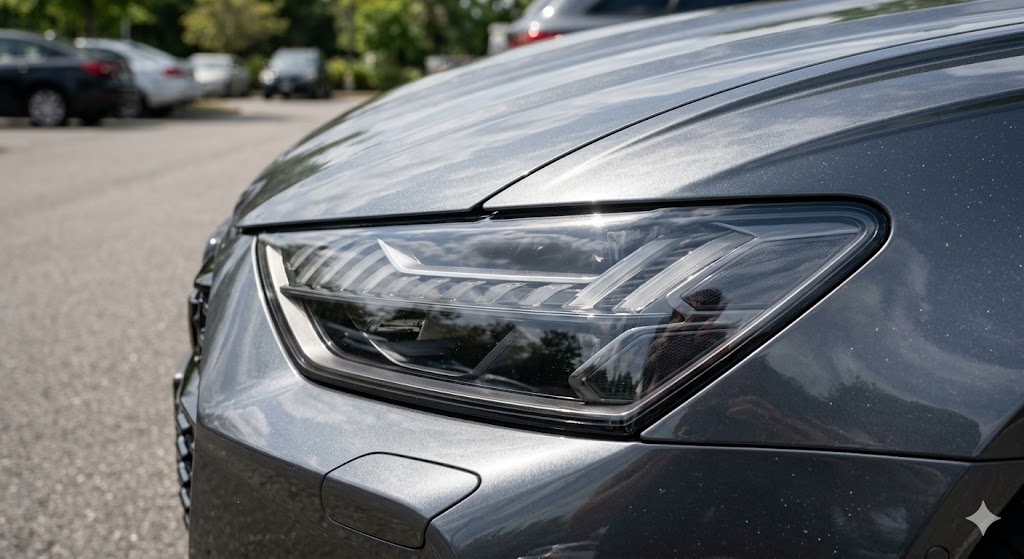
Headlight and taillight tint helps protect your vehicle’s lights from UV damage, road debris, and surface wear. This protective layer slows down fading, cracking, and clouding, which are the main reasons car lights fail early. For drivers in Kansas City, tinting is a practical way to extend the life of both headlights and taillights while maintaining consistent performance.
What Is Headlight and Taillight Tint and How Does It Work?
Headlight and taillight tint is a transparent or lightly smoked protective film applied over your car’s light lenses. It forms a barrier that shields the surface from environmental exposure without interfering with light output when installed correctly.
Most modern films are made from durable polyurethane or advanced vinyl. These materials are engineered to handle heat, resist discoloration, and stay intact under daily driving conditions. The film adheres tightly to the lens, creating a smooth outer layer that absorbs damage before it reaches the plastic underneath.
This layer works in two ways. First, it blocks harmful UV rays that break down the lens material. Second, it takes the impact from small debris and scratches that would otherwise damage the light directly. Over time, this reduces the need for repairs or replacements.
Why Do Car Lights Deteriorate Faster Without Protection?
Car light lenses are typically made from polycarbonate plastic. While strong, this material is highly sensitive to sunlight, heat, and airborne particles. Without protection, the surface starts to degrade slowly with everyday exposure.
UV rays are the biggest cause of damage. They break down the outer layer of the plastic, leading to oxidation. This is what causes headlights to turn yellow or cloudy. Once oxidation begins, it spreads across the surface and weakens the structure.
Road conditions in Kansas City also play a role. Dust, gravel, and salt used during colder months create tiny abrasions on the lens. These small scratches may not be noticeable at first, but they build up over time and reduce clarity.
Moisture and temperature changes add another layer of stress. Expansion and contraction can cause micro-cracks, especially in older lenses. Without a protective barrier, these combined factors shorten the lifespan of your lights significantly.
How Does Tint Protect Against UV Damage and Oxidation?
Tint films are designed to block a large percentage of ultraviolet rays. This slows down the chemical breakdown that leads to oxidation. By reducing direct exposure, the film helps the lens retain its original clarity for a longer period.
In Kansas City, where summers can be intense and winters bring fluctuating temperatures, this protection becomes more valuable. Constant exposure to sunlight without protection accelerates fading. Tint acts as a filter, limiting how much UV radiation reaches the surface.
Another benefit is consistency. Untreated headlights often degrade unevenly, leading to patchy clouding. Tint creates a uniform layer that protects the entire lens evenly, reducing the chances of uneven wear.
This preventive approach is more effective than restoration alone. Once oxidation becomes severe, polishing can only provide temporary results. Tint helps delay that stage, keeping maintenance simple.
Can Tint Prevent Scratches, Chips, and Road Debris Damage?
Yes, tint adds a physical layer that absorbs minor impacts from everyday driving. Small rocks, sand, and debris can cause tiny chips and scratches on exposed lenses. With tint in place, the film takes the damage instead of the light itself.
This is particularly helpful for highway driving in the Greater Kansas City area. Vehicles traveling at higher speeds are more likely to encounter debris kicked up by other cars. Even routine city driving exposes your lights to airborne particles.
The film’s flexibility allows it to absorb and disperse impact energy. While it cannot stop major damage from large objects, it significantly reduces surface-level wear. Over time, this helps maintain a smoother, clearer lens.
A smoother surface also resists dirt buildup. Scratched lenses tend to trap dust and grime, making cleaning more difficult. Tint helps keep the surface easier to maintain.
Does Tint Help Maintain Brightness and Visibility Over Time?
Tint helps maintain brightness by preserving the clarity of the lens. When headlights remain clear, they can project light more effectively. This improves visibility during night driving and in poor weather conditions.
A common concern is whether tint reduces light output. The answer depends on the type and quality of the film. Professional-grade, legal-compliant tint allows sufficient light transmission while still offering protection. Poor-quality or overly dark films can reduce brightness, which is why proper selection matters.
In Kansas City, where drivers deal with rain, fog, and seasonal weather changes, clear lighting is essential. Foggy or oxidized headlights scatter light instead of focusing it. This reduces visibility and can create safety risks.
By preventing haze and surface damage, tint supports consistent performance. It keeps your lights functioning as intended without frequent restoration.
How Does Tint Reduce Long-Term Maintenance Costs?
Headlight and taillight tint reduces the frequency of repairs and replacements. Modern headlights can be expensive, especially those with advanced lighting systems. Protecting them early helps avoid high replacement costs later.
Many drivers rely on restoration kits to fix cloudy headlights. These solutions work temporarily but require repeated use. Tint reduces the need for such maintenance by slowing down the damage process.
There is also a time-saving benefit. Regular polishing and cleaning can become a routine task when lights degrade quickly. With tint, the surface stays in better condition, reducing the need for constant upkeep.
In Kansas City, where environmental conditions vary throughout the year, this added protection helps keep maintenance predictable and manageable.
Is Headlight and Taillight Tint Legal in Kansas City?
Headlight and taillight tint is legal as long as it does not reduce visibility below acceptable levels. Regulations are focused on ensuring that your lights remain clearly visible to other drivers and provide adequate illumination.
The key factor is light transmission. Films must allow enough light to pass through so that headlights and taillights perform their safety function. An overly dark tint can lead to compliance issues and reduced safety.
Working with professionals in Kansas City helps ensure that your tint meets local guidelines. They understand which films are suitable and how to apply them without affecting performance.
Choosing a compliant option protects both your vehicle and your safety on the road.
Why Professional Installation Matters for Longevity
Professional installation plays a major role in how long tint lasts and how well it performs. Proper application ensures that the film adheres evenly, without bubbles, wrinkles, or gaps.
Experienced technicians use precision-cut films designed for specific vehicle models. This results in clean edges and full coverage. Poor installation can lead to peeling or early failure, which reduces the benefits of tinting.
DIY kits may seem convenient, but they often lack the quality and fit of professional products. Mistakes during application can trap air or moisture, weakening the film over time.
In the Greater Kansas City area, working with a trusted provider ensures that the installation meets both performance and legal standards.
What Types of Tint Films Offer the Best Protection?
Different types of tint films provide varying levels of durability and performance. Polyurethane films are known for their strength and resistance to impact. These are often used for protective applications where durability is a priority.
Ceramic-based films offer added heat resistance and clarity. They maintain their appearance over time and resist fading better than standard options. This makes them a good choice for long-term use.
Premium brands such as Solar Gard are designed to provide consistent performance under different conditions. These films are engineered to resist discoloration and maintain their protective qualities for years.
Selecting the right film depends on your driving habits and environmental exposure. A professional installer can help match the film to your needs.
What Common Mistakes Should You Avoid With Light Tinting?
Choosing an overly dark tint is one of the most common mistakes. While it may improve appearance, it can reduce visibility and lead to legal issues. Staying within recommended limits ensures safety and compliance.
Another mistake is using low-quality films. Cheaper materials tend to fade, crack, or peel quickly. This results in uneven protection and additional costs for replacement.
Skipping professional installation can also create problems. Poor application reduces the effectiveness of the film and may require early removal.
Ignoring maintenance is another factor. While tint reduces upkeep, basic care is still needed. Gentle cleaning and avoiding harsh chemicals help extend the life of the film.
How Long Does Headlight and Taillight Tint Last?
High-quality tint films can last between five and ten years. The exact lifespan depends on factors such as climate, driving conditions, and maintenance.
In Kansas City, seasonal changes can affect durability. Heat, cold, and moisture all impact how materials perform over time. Premium films are designed to handle these variations better than standard options.
Regular cleaning and proper care help maintain the film’s condition. Avoiding abrasive materials and strong chemicals prevents premature wear.
When installed correctly and maintained well, tint provides long-term protection that supports the overall lifespan of your car lights.
FAQs About Headlight and Taillight Tint
Does headlight tint reduce visibility at night?
No, not when you use high-quality, legal-compliant film. Proper tint allows enough light to pass through while protecting the lens from damage that would otherwise reduce visibility.
Can I remove the tint if needed?
Yes, professional-grade tint can be removed safely without damaging the lens. This allows you to replace or upgrade the film when necessary.
Is tint better than restoring headlights?
Tint works as a preventive solution, while restoration fixes existing damage. Using both together can provide better long-term results.
Will tint change the appearance of my lights?
Yes, tint can slightly darken or refine the look of your headlights and taillights. The effect depends on the type and shade of film used.
Conclusion
Headlight and taillight tint is a practical way to extend the lifespan of your car lights by protecting them from UV damage, debris, and everyday wear in Kansas City. It helps maintain clarity, reduce maintenance costs, and support consistent visibility over time.
A1 Window Tinting provides professional tint solutions backed by decades of experience in the Greater Kansas City area. Contact our team to protect your vehicle with reliable headlight and taillight tint designed for long-term performance.